


Every Thursday morning for the past year, Penny Barber has met her friends for Tai Chi classes at the Blue Door Neighborhood Center℠ in Albuquerque’s South Valley. As a prediabetic with arthritis, Barber manages her condition through diet and exercise.
An estimated 1.5 million Americans each year develop diabetes. People with the condition face twice the risk of heart disease, which remains the No. 1 cause of death for women in the U.S., according to the Centers for Disease Control and Prevention.
Blue Cross and Blue Shield of New Mexico is working year-round to help educate and protect communities from cardiovascular health conditions through its Blue Door Neighborhood Center and other heart-forward programming.
“I’m at the age now that I’m trying to fix everything that I broke or that I never worked on,” Barber, 76, says through a laugh.
Weekly Tai Chi classes turned into Barber and her friends attending monthly farmers markets, cooking demonstrations, education sessions and visiting the Blue Cross and Blue Shield of New Mexico Care Van® program to check her blood sugar, cholesterol and blood pressure.
Over time, diabetes can damage blood vessels and cause high blood pressure, a heart attack or heart failure. Eating healthy foods and exercise are proven to lower the risk of heart disease.
Barber credits Blue Door Neighborhood Center programming, in part, for contributing to her positive health progress. She’s brought down her A1C and cholesterol levels and no longer needs to take blood pressure medications. She’s also improved her balance and arthritis pain in her knees, hands and feet.
“The staff at Blue Door Neighborhood Center are amazing,” she says. “They’re so upbeat and encouraging and happy to see you and that’s what we walk into each week.”
Closing gaps in care
BCBSNM is working to close gaps in care and improve diabetes and cardiovascular health outcomes through its Quality Innovation Institute. The effort targets key measures of health care quality and identifies opportunities to improve member outreach, create educational programming and test and implement other interventions that bolster prevention and care outcomes.
“We’re always striving to deliver the highest-quality care to our members and communities across the state,“ says Dr. Latha Shankar, BCBSNM chief medical officer and VP, Healthcare Delivery. “Focusing our efforts on improving outcomes for those living with diabetes and cardiovascular health conditions remains a key priority, and helps people live healthier, happier lives.”
Heart health month
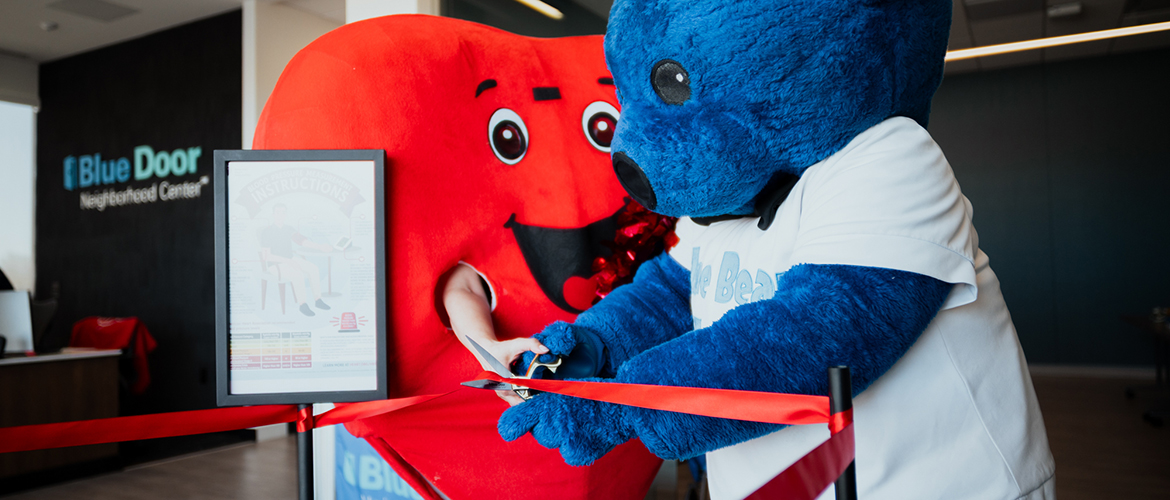
Throughout American Heart Health Month in February BCBSNM’s Blue Door Neighborhood Center in Albuquerque hosted classes teaching participants how to take their own blood pressure and handed out 30 blood pressure cuffs for visitors to monitor their numbers at home.
The classes complement year-round programming, including no-cost Zumba and line dancing classes, healthy cooking classes, and no-cost food bags handed out during monthly Fresh Harvest Markets.
“We have some visitors who don’t go to the doctor and come to Blue Door Neighborhood Center to check their blood pressure,” says Julia Martinez, Blue Door Neighborhood Center health educator. “We work to break down barriers and prepare visitors for the first step in their journey toward overall health, and heart health is a big part of that.”
BCBSNM has longstanding partnership with the American Heart Association, including sponsoring the AHA Red Dress Collection Awards and working together to install a blood pressure monitoring station last year at the BDNC.
The health plan promotes cardiovascular health in communities across the state with its Care Van mobile health program. The program works with providers and local organizations to educate communities about heart health and other chronic conditions, provide no-cost blood pressure, glucose and cholesterol screenings and immunizations, among other outreach efforts.
In 2025, the Care Van program provided more than 1,100 blood pressure screenings, 623 glucose screenings and 526 cholesterol screenings statewide.
“Community members in rural areas have greater access issues and may not have had their blood pressure or cholesterol recently checked,” says Amy Fisher, BCBSNM community relations manager. “If a screening is out of range, it can prompt them to seek follow-up care with a provider”